

At-Home Micro Peels: Which One Is Right for Your Skin?
At-home peels have changed considerably. They no longer necessarily mean aggressive acids, obvious peeling or several days of downtime. Today there are options ranging from gentle enzyme and acid treatments through to more intensive weekly micro peels and advanced home peeling treatments.
That choice is useful, but it can also make deciding what to use surprisingly difficult.
Should you choose glycolic, lactic or mandelic acid? Is salicylic better if you have blocked pores? What is a PHA? And where do enzyme exfoliators fit in? At Medifine, we think the starting point should be what your skin needs, rather than simply looking for the strongest peel.
What is a micro peel?
A micro peel is a superficial resurfacing treatment designed to loosen and remove the accumulation of dead cells at the skin’s surface.
Some use acids, others use enzymes, and increasingly we are seeing sophisticated formulations that combine several methods of exfoliation in one treatment.
Despite the name, you don’t have to see your skin physically peeling for a micro peel to be effective. Many modern formulations are designed to provide gradual resurfacing with little or no visible flaking.
AHA, BHA or PHA – what’s the difference?
Not all exfoliating acids work in the same way, which is why understanding the basics can make choosing a product much easier.
AHAs – Alpha Hydroxy Acids
AHAs work primarily at the skin’s surface, loosening the bonds between dead cells so they can be shed more effectively. They are particularly useful for dullness, pigmentation, uneven tone, rough texture and signs of sun damage.
There are several different AHAs.
Glycolic acid has a relatively small molecular size and is an effective resurfacing acid. It can be particularly useful for rough texture, dullness and uneven tone, although some skins find it quite active.
Lactic acid provides exfoliation but also has humectant properties, making it an interesting option when hydration as well as resurfacing is important.
Mandelic acid has a larger molecular structure and penetrates more slowly. It is frequently chosen when pigmentation, uneven tone or blemishes are concerns and can be a useful alternative for skin that doesn’t tolerate more aggressive acids as well.
BHA – Beta Hydroxy Acid
In skincare, the BHA you’re most likely to encounter is salicylic acid.
Salicylic acid is oil soluble, which allows it to work within oily pores as well as on the skin’s surface. This makes it particularly useful for congestion, blackheads, excess oil and blemish-prone skin.
If blocked pores are your main concern, simply choosing a stronger AHA isn’t necessarily the answer. A well-chosen salicylic acid product may be much more appropriate.
PHAs – Polyhydroxy Acids
PHAs also exfoliate the surface of the skin but have a larger molecular structure than traditional AHAs and tend to work more gradually.
They can be useful when a gentler approach to acid exfoliation is wanted.
And what about enzymes?
Enzymes aren’t acids.
Fruit-derived enzymes can help loosen and remove keratinised surface cells, providing another method of improving dullness and texture. They can be used on their own or incorporated into formulations alongside acids.
This brings us to another increasingly popular category: multi-action exfoliators.
These can combine AHAs, BHAs, enzymes and sometimes physical exfoliation within a single treatment. They provide broader resurfacing, but that doesn’t automatically mean they’re suitable for every skin.
So where should you start?
We’ve divided some of our favourite at-home resurfacing treatments into four simple levels.
LEVEL 1 – GENTLE RESURFACING
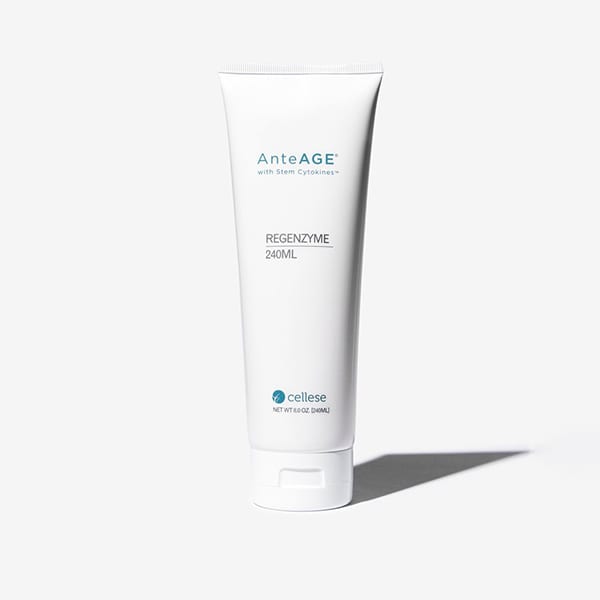
AnteAGE GLOW Regenzyme
Regenzyme is a good introduction to regular resurfacing without immediately moving on to stronger acids.
It uses enzyme-based exfoliation to help remove surface build-up and leave dull or rough-feeling skin looking fresher and smoother.
This can also be a useful option for someone whose skin needs regular maintenance rather than an intensive peel.
Best for: Dullness, surface roughness and maintaining smoother, brighter-looking skin.
Choose this if: You want gentle enzyme resurfacing rather than a traditional acid peel.
Explore AnteAGE Glow Regenzyme
LEVEL 2 – ACTIVE RESURFACING
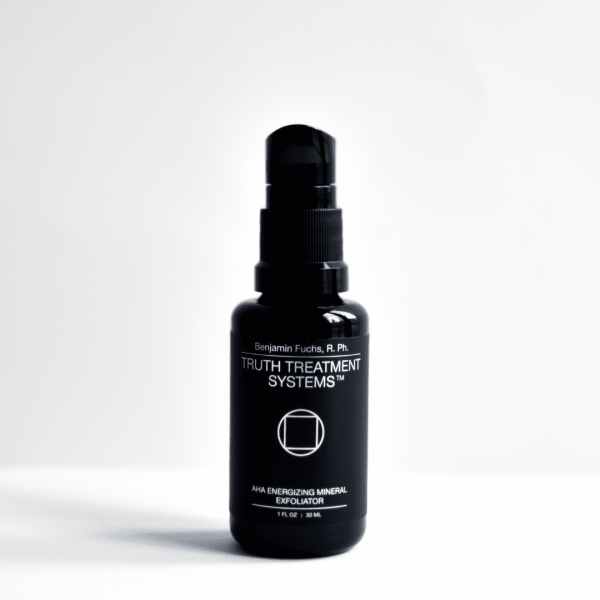
Truth Treatment Systems AHA Energizing Mineral Exfoliator
Truth takes a slightly different approach to exfoliation.
Its AHA Energizing Mineral Exfoliator is a leave-on acid treatment rather than a traditional rinse-off peel, making it easy to incorporate into an established skincare routine.
It is particularly suited to skin where dullness, uneven tone and texture are the main concerns.
Best for: Dullness, uneven tone and texture.
Choose this if: You want regular AHA resurfacing rather than an occasional stronger peel.
Explore Truth Treatment Systems AHA Energizing Mineral Exfoliator
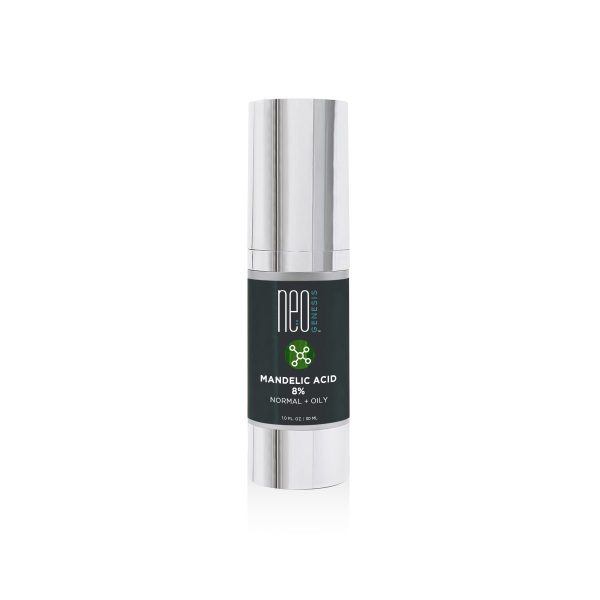
NeoGenesis Mandelic Acid
Mandelic acid is particularly interesting when pigmentation and blemish-related discolouration are concerns.
Because of its larger molecular structure, it works differently from smaller AHAs such as glycolic acid and can be a useful choice when you want active exfoliation without automatically moving to a more aggressive peel.
Best for: Pigmentation, uneven tone and blemish-prone skin.
Choose this if: Discolouration is one of your main concerns.
Explore NeoGenesis Mandelic Acid
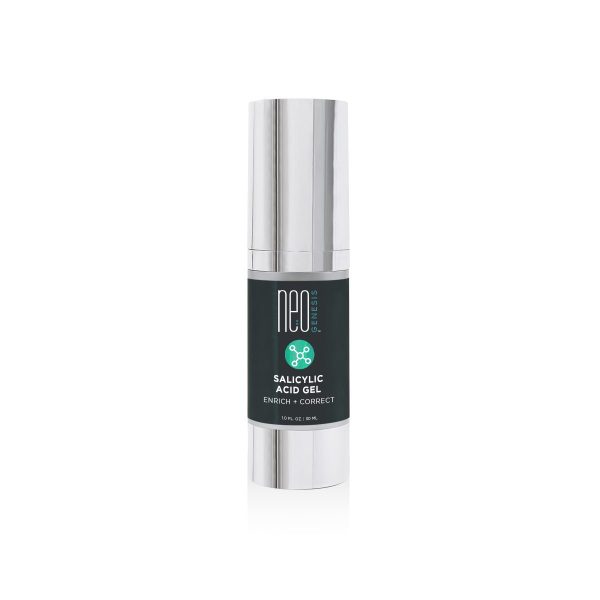
NeoGenesis Salicylic Acid
This is where choosing an acid for a specific concern really matters.
Salicylic acid is oil soluble, making it particularly useful where blocked pores, congestion, excess oil and blemishes are the problem.
Someone with congested skin doesn’t necessarily need an all-over stronger peel. Targeted BHA exfoliation can make considerably more sense.
Best for: Congestion, blackheads, oiliness and blemish-prone skin.
Choose this if: Pores and congestion are your priority.
Explore NeoGenesis Salicylic Acid
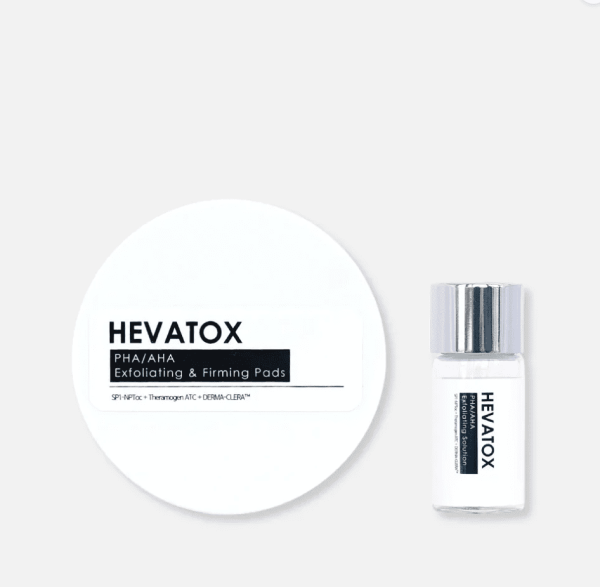
Hevatox AHA/PHA
Combining AHAs and PHAs provides another approach to regular resurfacing.
The AHAs address surface dullness and texture while the PHA component offers a more gradual form of exfoliation.
Best for: Dullness, uneven texture and regular resurfacing.
Choose this if: You want ongoing acid exfoliation rather than an occasional intensive peel.
LEVEL 3 – WEEKLY & INTENSIVE MICRO PEELS
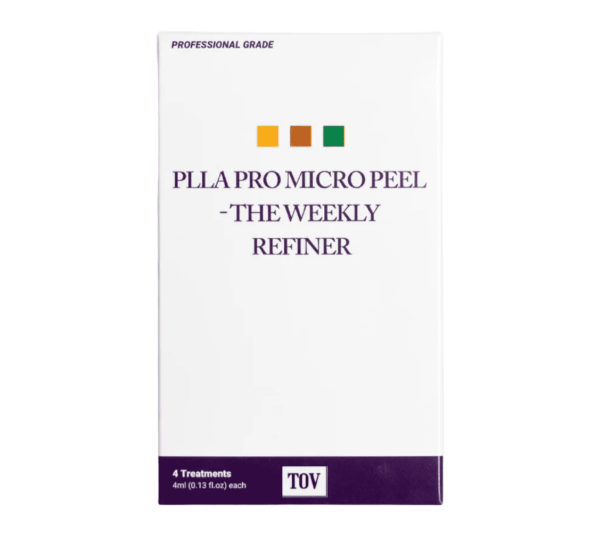
PLLA Micro Peel / Weekly Refiner
This sits naturally within a weekly skincare routine rather than being something used every day.
A weekly refiner can be particularly useful for someone who already uses active skincare but wants an additional, dedicated resurfacing treatment.
Best for: Dullness, uneven texture and maintaining smoother-looking skin.
Choose this if: You want a regular weekly micro peel rather than a daily acid.
Explore PLLA Micro Peel / Weekly Refiner
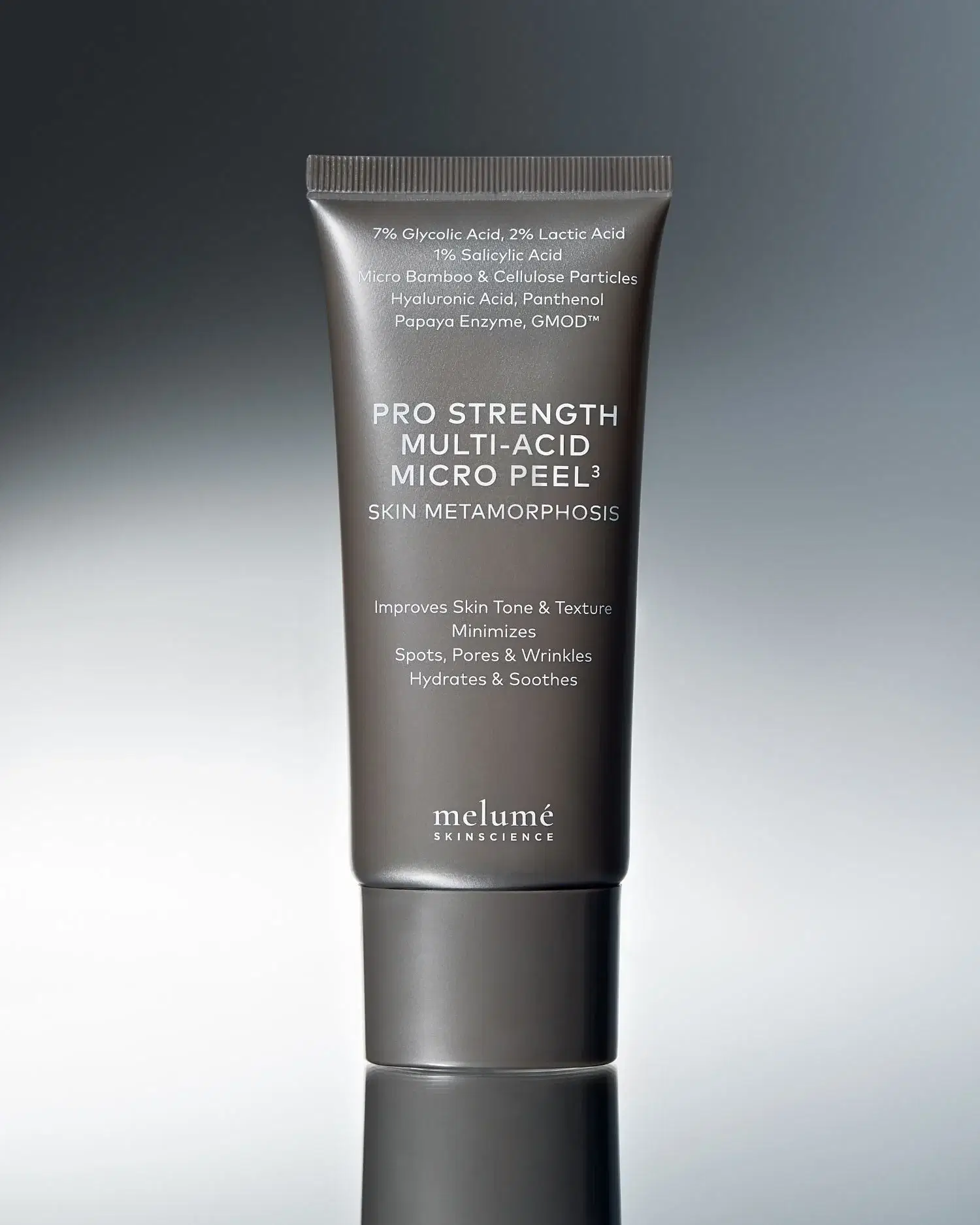
Melumé Pro-Strength Multi-Acid Micro Peel
Melumé moves us into more intensive multi-acid resurfacing.
Rather than relying on one individual acid, it uses a broader exfoliating approach, making it particularly interesting where there are several concerns such as pigmentation, dullness, pores and uneven texture.
Best for: Pigmentation, texture, dullness and enlarged-looking pores.
Choose this if: You want a more comprehensive micro peel rather than a single targeted acid.
Explore Melumé Pro-Strength Multi-Acid Micro Peel
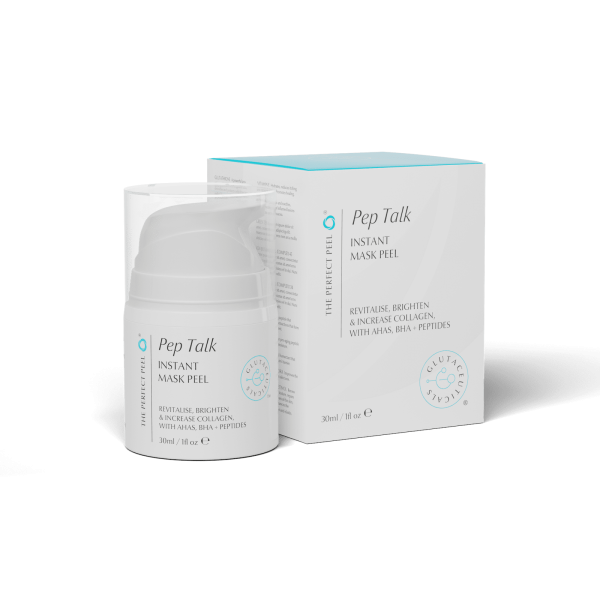
The Perfect Peel Instant Mask
This is an occasional, more intensive approach for someone who likes the idea of a peel treatment but doesn’t necessarily want the downtime associated with a professional chemical peel.
It fits particularly well when you want a periodic boost rather than another product that has to be incorporated into the routine every day.
Best for: Dullness and an occasional skin refresh.
Choose this if: You want an intensive peel-style mask rather than regular daily exfoliation.
Explore The Perfect Peel Pep Talk Instant Mask
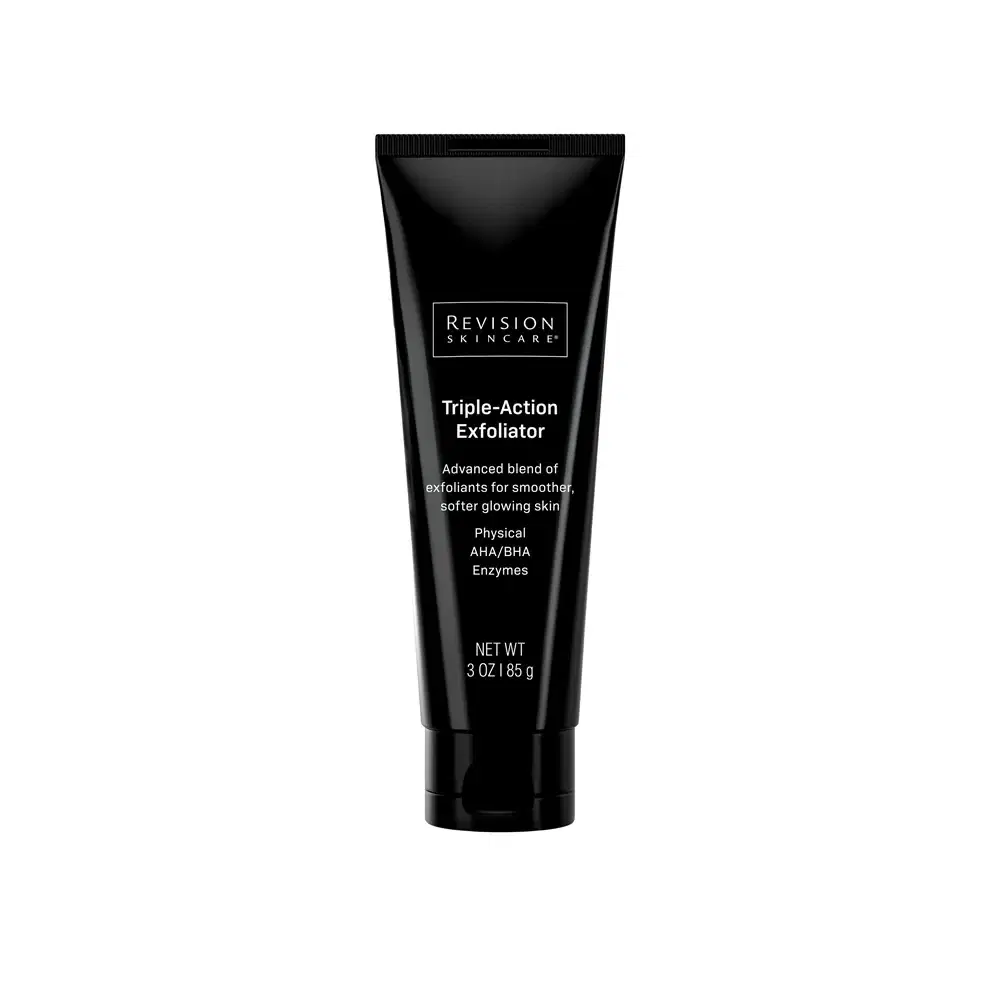
Revision Skincare Triple-Action Exfoliator
This is an interesting one because Revision doesn’t rely on just one form of exfoliation.
Triple-Action Exfoliator combines three different methods of resurfacing in a single treatment.
First, chemical exfoliation using AHAs and BHAs helps loosen dead surface cells. The BHA component also makes the formulation particularly interesting when congestion is part of the problem.
Second, pomegranate enzymes provide enzymatic exfoliation, helping break down and lift away keratinised surface cells.
Finally, four physical micro-exfoliators provide immediate manual resurfacing as the product is massaged over the skin.
The formula also includes a postbiotic complex to complement the resurfacing ingredients.
The result is quite different from using a straightforward acid. It addresses the skin’s surface in several ways and is particularly suited to rough texture, dullness and lack of smoothness.
It can be used one to three times weekly, depending on the skin, its tolerance and what other active products are already being used.
Best for: Rough texture, dullness and more comprehensive exfoliation.
Choose this if: You like the idea of chemical, enzyme and physical exfoliation together rather than a traditional acid-only micro peel.
Explore Revision Skincare Triple-Action Exfoliator
LEVEL 4 – ADVANCED AT-HOME PEELING
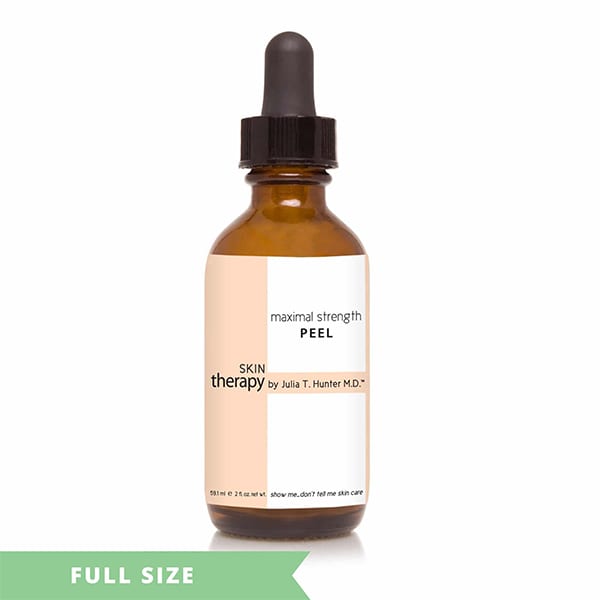
Julia T. Hunter Maximal Strength Peel
Julia T. Hunter sits at the advanced end of this collection.
We wouldn’t describe this in the same way as a gentle weekly micro peel. It is intended for someone accustomed to active skincare who wants a considerably more intensive at-home resurfacing treatment.
Visible flaking or peeling can occur, so this isn’t where we would suggest beginning if you are completely new to acids and peels.
Best for: Experienced users wanting more intensive resurfacing.
Choose this if: You are already comfortable using active skincare and are looking to progress to an advanced home peel.
Explore Julia T. Hunter Maximal Strength Peel
Which one should you choose?
It is tempting to assume that a stronger peel will give a better result. That’s not necessarily the case.
If your main problem is congestion and blackheads, salicylic acid may be more useful than moving straight to an intensive AHA peel.
For pigmentation and uneven tone, mandelic acid, other AHAs and carefully chosen multi-acid formulations may be more appropriate.
For dull, rough skin, enzymes, AHAs or a multi-action exfoliator can all have a place.
And if you’re completely new to acids, starting gently and seeing how your skin responds is preferable to beginning with the strongest treatment available.
Can I use a micro peel with retinol?
This is something we are frequently asked. If you already use a retinoid, exfoliating toner, acid serum or another active treatment, don’t simply add a micro peel on top.
More exfoliation does not necessarily mean better skin.
Overdoing acids and retinoids can disrupt the skin barrier and result in redness, tightness, sensitivity and irritation. In some skin types, excessive inflammation can also make pigmentation more difficult to manage.We generally prefer to separate stronger exfoliating treatments from other potentially irritating actives, unless the products have been specifically formulated or recommended to be used together.
Introduce one new active treatment at a time and follow the manufacturer’s directions for the individual product.
And when using exfoliating acids, daily broad-spectrum SPF is essential.
Still unsure?
There is no single ‘best’ micro peel.
The right choice depends on your skin type, what you are trying to improve, how experienced your skin is with active ingredients and, importantly, what else you’re already using. `
At Medifine Aesthetics we can help you choose an appropriate option from our at-home peel and resurfacing range. If you’re unsure, tell us your main skin concern and the products you’re currently using. We’d much rather help you choose the right exfoliation for your skin than simply recommend the strongest peel.